Repairs
Dishwasher Salt and Dishwasher Detergent Do Different Jobs
Pouring detergent into the salt reservoir, or skipping salt because the detergent claims to be 'all-in-one,' leaves hard-water spotting uncured in most machines.
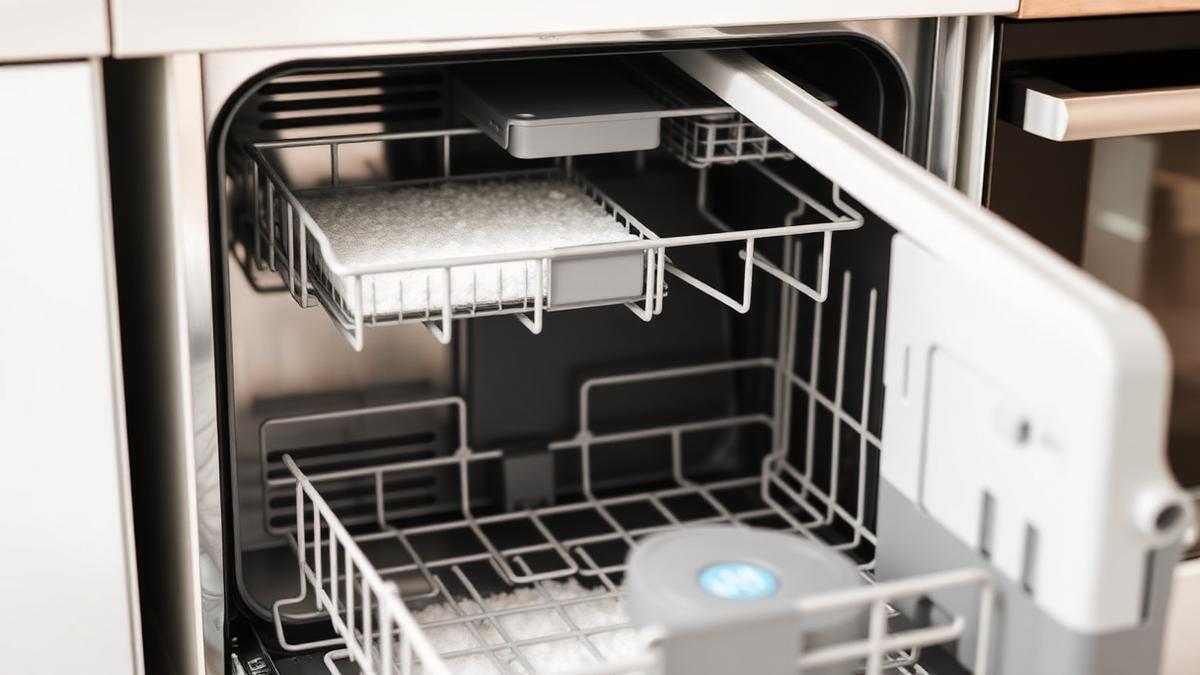
Dishwashers with a built-in softener use resin beads to strip calcium and magnesium from incoming water. Dishwasher salt (pure sodium chloride) periodically flushes and regenerates that resin. Detergent, even the multi-tablet kind marketed as replacing salt, has no ion-exchange function — it's a surfactant and enzyme blend for cleaning food residue.
In genuinely hard-water areas, skipping salt lets limescale build up on heating elements and glassware, showing up as cloudy glasses and a machine that runs less efficiently over time. 'All-in-one' tablets work fine in softer water but underperform once hardness rises above roughly 15-20 grains per gallon.
Written and reviewed by Jim Vernon, editor of Home & Garden Answers · Last updated
Put this into practice
More facts like this
- More Drywall Screws Make a Weaker WallA drywall screw holds through the paper face, not the gypsum core. Drive it a fraction too deep and its holding power drops to near zero.
- A Clogged Gutter Does More Damage to the Foundation Than the RoofThe roof usually survives a clogged gutter. The foundation, sitting right where the overflow lands, does not.
- Sediment at the Bottom of a Water Heater Is Quietly Costing You MoneyAn unflushed water heater tank can lose a meaningful share of its efficiency to a layer of sediment most people never see.