A Monthly Maintenance Rhythm for a First-Time Homeowner
By Jim Vernon · 5 min read · Last updated
You don't need a 100-item annual list. You need twelve short monthly ones.
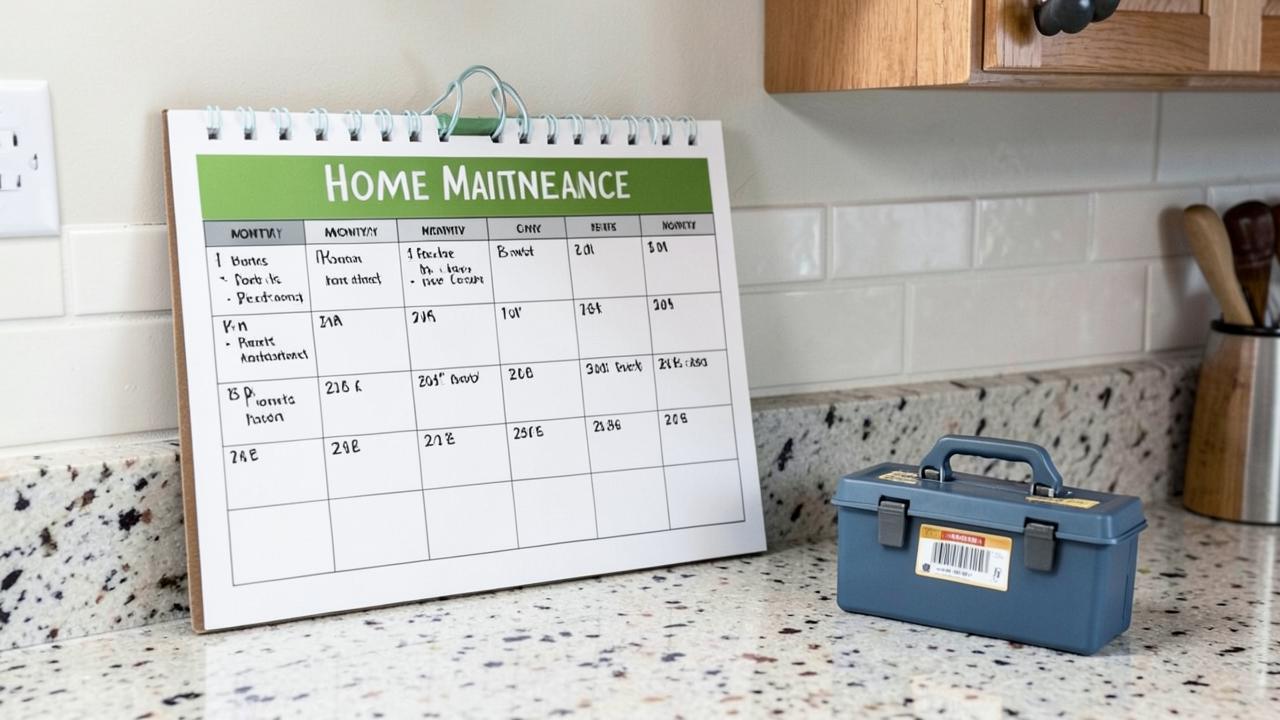
A workable monthly maintenance rhythm for a first-time homeowner breaks the year's tasks into small, seasonally logical chunks of roughly one to two hours each month, rather than one overwhelming annual checklist that never gets started. The key is matching tasks to the season they actually matter in, not doing everything at once.
Why does a monthly rhythm work better than one big annual checklist?
A 60-item annual home maintenance checklist is accurate but useless in practice, because most people read it once, feel overwhelmed, and do none of it. Breaking the same tasks into monthly chunks of 3-6 items each turns an intimidating list into a habit that takes less time than a load of laundry, and it naturally sequences tasks for when they matter — you're not testing smoke detectors in July when the real risk is winter heating season.
| Month | Focus | Example tasks |
|---|---|---|
| January | Winter systems check | Test CO detectors, check for ice dams, inspect attic for condensation |
| February | Interior deep tasks | Clean dryer vent, check water heater for sediment/leaks |
| March | Pre-spring prep | Inspect roof from ground after winter, check sump pump |
| April | Spring exterior | Clean gutters, check exterior caulking, service lawn mower |
| May | Outdoor systems on | Turn on and test irrigation, inspect deck/fence for winter damage |
| June | Cooling season prep | Replace HVAC filter, clean AC condenser coils, check window screens |
| July | Mid-summer checks | Inspect for pests/termite signs, check caulking around tub/shower |
| August | Pre-fall planning | Schedule furnace tune-up, inspect chimney if wood-burning |
| September | Fall exterior | Clean gutters again, winterize irrigation, check weatherstripping |
| October | Winterize outdoor | Drain hose bibs, seal gaps, test heating system fully |
| November | Pre-winter safety | Replace smoke/CO detector batteries, check attic insulation |
| December | Light interior checks | Test GFCI outlets, inspect fireplace/chimney, check for drafts |
What's the minimum viable version if I only have 20 minutes a month?
- Walk the exterior once a month looking for anything obviously wrong — a stain, a crack, a loose gutter — even without a formal checklist.
- Replace the HVAC filter on whatever schedule its packaging recommends (often monthly for basic filters, up to 90 days for high-efficiency ones).
- Test smoke and CO detectors during the same visit each month so it becomes automatic rather than something to remember separately.
- Keep a running note (phone notes app is fine) of anything you spot but don't fix immediately, so small issues don't get forgotten until they're expensive ones.
How much does staying on top of monthly maintenance actually save?
| Neglected task | Deferred cost | Prevention cost |
|---|---|---|
| HVAC filter never changed | $1,500-5,000 early system failure | $15-25 filter, changed on schedule |
| Water heater sediment never flushed | $800-1,500 early replacement | 30 min DIY flush, 1-2x per year |
| Dryer vent never cleaned | House fire risk + reduced dryer life | $0-50 DIY cleaning kit, annual |
| Gutters never cleaned | $1,500-8,000 ice dam or foundation damage | $0-30 in tools, 2x per year |
How do you build this into an actual habit?
- Pick a recurring date, like the first Saturday of the month, rather than 'sometime this month.'
- Pair it with an existing habit — many people do a maintenance walk-through right after paying the mortgage or rent.
- Use a simple shared calendar reminder or app rather than relying on memory alone.
- Accept an imperfect month — skipping one month and picking the list back up is far better than abandoning the system after one missed week.
What if you move into a house mid-year?
Don't try to backfill every month you missed — start with whatever month you're actually in and add a one-time "welcome to the house" pass that covers a few things a monthly rhythm assumes are already known: locate the water shutoff, breaker panel, and HVAC filter size and location; check the age of the water heater and furnace (the manufacture date is usually on a sticker) so you know roughly when to expect replacement; and walk the attic and crawlspace once just to have a baseline for what's normal before you're comparing it to a future problem. After that one-time pass, join the monthly rhythm at whatever month lines up with the calendar.
How does this rhythm differ for an older home versus a new build?
A home under about 5 years old still under warranty coverage on major systems needs a lighter monthly touch — mostly filters, detectors, and seasonal exterior checks — since the structure and systems are new and unlikely to fail without warning. A home over 20-30 years old benefits from adding a few recurring checks the newer-home list doesn't need: an annual sewer line camera inspection ($150-300) if there are mature trees near the line, more frequent water heater flushing since sediment buildup accelerates with age and hard water, and closer attention to roof and window seal condition, since most of these components are rated for 20-30 years and start showing real wear right around then. The monthly rhythm stays the same size either way; only the specific items shift.
What's the single most commonly forgotten home maintenance task?
Dryer vent cleaning. It's invisible, doesn't cause an obvious symptom until lint buildup significantly restricts airflow, and is a leading cause of house fires when neglected for years. Aim for at least once a year, more often for households doing frequent laundry.
Should renters follow a maintenance schedule too?
A lighter version, yes — things like replacing HVAC filters (if the renter is responsible), testing smoke detectors, and reporting issues promptly protect both the renter's safety and the deposit. Structural and system maintenance (roof, HVAC servicing) is typically the landlord's responsibility.
How do I know which tasks apply to my specific house?
Start with the universal ones (smoke detectors, HVAC filters, gutters) and then add house-specific items based on what you have — a wood-burning fireplace, irrigation system, or sump pump each add a few tasks the generic checklist won't include.
Run the numbers for your own project
- Home Maintenance ScheduleWhat should I be doing to my home this month?
- Gutter and Downspout CalculatorHow much gutter and how many downspouts does my roof need?
- What to Plant This MonthWhat can I plant right now where I live?
Keep reading
- The Seasonal Maintenance Jobs That Prevent Expensive RepairsAlmost every large repair bill starts as a small maintenance job that nobody scheduled.
- Preventing Frozen Pipes: What Works and What's Just FolkloreFrozen pipes rarely burst from the ice itself — they burst from the pressure trapped between the ice and a closed faucet.
- Roof Inspection From the Ground: What Binoculars Can Tell YouMost roof failures announce themselves months in advance, in ways you can see from the lawn.