Garden Path Materials Compared: Gravel, Pavers, Stepping Stones, and Mulch
By Jim Vernon · 4 min read · Last updated
A path is one of the few garden features you touch every day. The material decides whether it stays easy or becomes a chore.
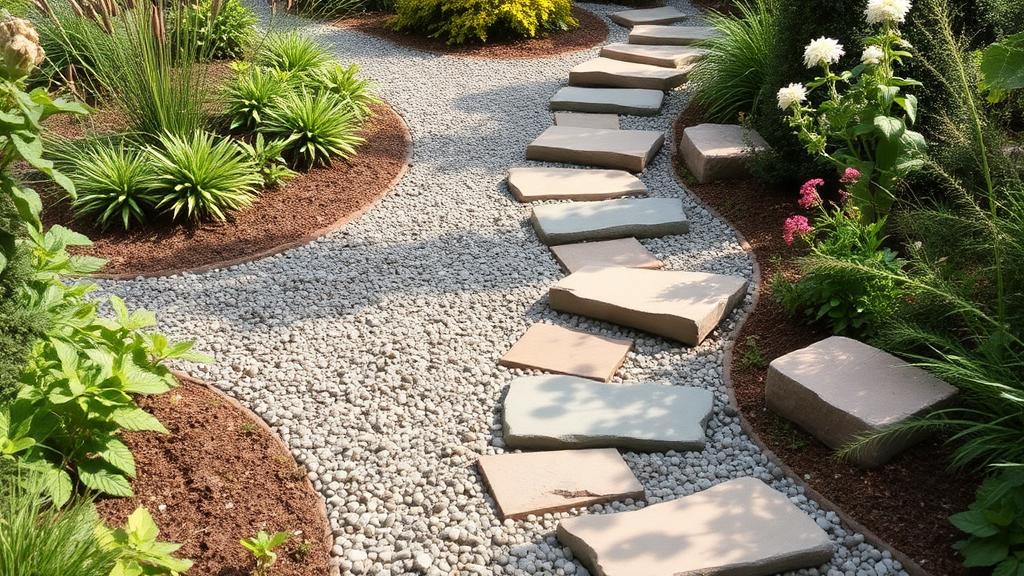
Garden paths get judged on looks in the planning stage and on maintenance every day after that. Gravel, pavers, stepping stones, and mulch each trade off differently between upfront cost, ongoing upkeep, and how well they handle wet weather and heavy use.
Side-by-side comparison
| Material | Upfront cost | Drainage | Maintenance | DIY difficulty |
|---|---|---|---|---|
| Gravel | Low-Medium | Excellent | Periodic top-up and weeding | Easy |
| Concrete or clay pavers | Medium-High | Good if laid with joints | Occasional relevelling, joint sand refresh | Moderate |
| Natural stone stepping pads | Medium-High | Very good | Low; occasional resetting if they shift | Moderate |
| Mulch or wood chips | Low | Good | Annual topping up; decomposes over time | Easy |
Gravel: the flexible, low-cost default
Gravel paths handle curves easily, drain well, and are the cheapest option to install over a given area, but they need edging to stop material migrating into beds or lawn, and they need periodic raking and top-up as gravel settles or scatters with foot traffic and rain.
Pavers: the most durable but least forgiving to install
A well-laid paver path on a properly compacted gravel base and sand setting bed can last decades with minimal maintenance, but skipping base preparation is the single most common reason paver paths heave, sink, or shift within a couple of seasons. This is the material where cutting corners on prep costs the most later.
Stepping stones: informal and forgiving
Individual stepping pads set with gaps for groundcover or gravel between them suit informal garden paths and areas with light, occasional foot traffic. Spacing should match a natural walking stride, typically pad centres 22-26 inches apart, so the path feels comfortable rather than requiring an awkward gait.
Mulch: cheapest but needs the most upkeep
Wood chip or bark paths cost the least to install and feel soft underfoot, which suits informal woodland-style gardens, but they compact, decompose, and need topping up annually, and they do not hold up well under wheelbarrow traffic or wet, muddy conditions the way gravel or pavers do.
Choosing by how the path will be used
- Main entry path used daily in all weather: pavers, for durability and a level, non-slip surface.
- Secondary path through planting beds: gravel or stepping stones, for a lower-cost, more flexible layout.
- Occasional path through a woodland or informal border: mulch, for the softest look and lowest install cost.
- Wheelbarrow or cart access routes: pavers or well-compacted gravel, since loose stepping stones shift under load.
Combining materials along one path
Many real paths are not a single material end to end. A common approach uses pavers or a poured strip for the main entry sequence closest to the door, where daily traffic and weather exposure are heaviest, then transitions to gravel or stepping stones further into the garden where use is lighter and a more relaxed look suits the setting better. The transition point works best at a natural break, such as a gate, a change in grade, or where a planting bed begins.
A worked example: costing a 40-foot path
A 40-foot path at 3 feet wide covers 120 square feet. At roughly 2-3 inches of gravel depth, that needs about 1-1.5 cubic yards of material, a modest weekend project cost. The same footprint in dry-laid pavers costs several times more per square foot once base gravel, sand setting bed, and the pavers themselves are added up, but the paver path will still look the same in twenty years while the gravel path will have needed several top-ups by then. Stepping stones fall between the two on material cost but add labor for careful spacing and leveling of each individual pad.
Edging keeps every material honest
- Steel or aluminum edging holds a crisp line for gravel or mulch paths without the bulk of stone or timber edging.
- Brick-on-edge or paver soldier courses double as edging for a paver path while echoing the same material.
- Without edging, gravel migrates into lawn and beds within a season, and mulch paths blur into adjacent planting areas.
- Edging set slightly proud of the path surface also helps contain loose material during heavy rain.
Common path-material mistakes
- Choosing a material purely on looks in a plan sketch without accounting for how it performs under actual foot traffic and local rainfall.
- Skipping edging on a gravel or mulch path, then re-doing the whole border within a year once material has scattered everywhere.
- Using the same material for a steep slope as for a flat run, instead of switching to steps or a firmer surface where grade demands it.
- Underestimating base depth needed under pavers, leading to sinking and uneven joints within a season or two.
Do I need landscape fabric under gravel paths?
It helps slow weed growth initially, but fabric degrades and weeds eventually root in the accumulated dust and organic debris on top of it. Periodic weeding is still needed regardless.
How wide should a garden path be?
A minimum of 24-30 inches for a single-person path, and 4-5 feet if two people need to walk side by side or a wheelbarrow needs to pass.
Can pavers be laid without mortar?
Yes, dry-laid pavers set in a compacted base with sand-filled joints are standard for garden paths and are easier to repair than a fully mortared surface.
Run the numbers for your own project
- Gravel and Path CalculatorHow much gravel do I need for my path or driveway?
- Concrete CalculatorHow much concrete do I need?
Keep reading
- Choosing Flooring: Matching the Material to the RoomEvery flooring material is the right answer somewhere and a costly mistake somewhere else.
- Choosing a Paint Sheen: What Flat, Eggshell, and Satin Actually DoThe sheen on the tin matters as much as the colour, and it is the choice most people skip past.
- Houseplant Light Levels Explained Without the Guesswork'Bright indirect light' is the most common plant tag instruction and the least understood.