Flower (annual)
Sunflower
Helianthus annuus
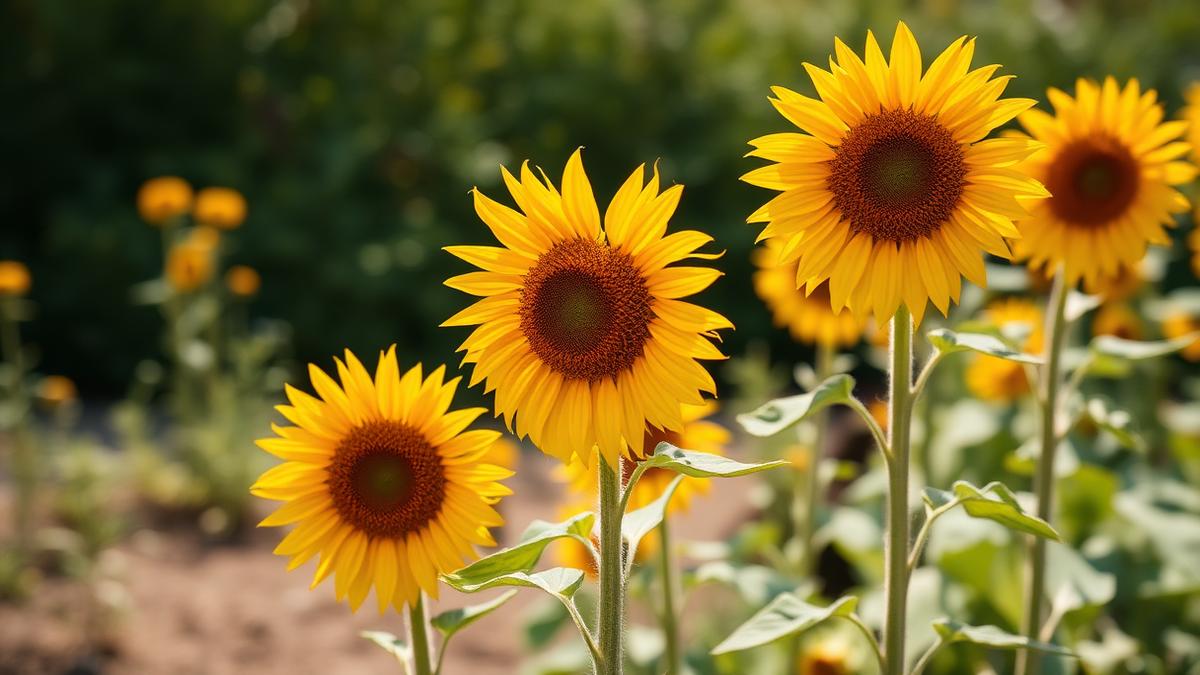
A fast, tall annual that tracks the sun as a seedling and stops moving once flowering begins — the classic beginner flower with a real taproot to respect.
| Light | Full sun, 6-8+ hours |
|---|---|
| Water | Moderate; deep watering once established, more while budding |
| Spacing | 30-60 cm depending on variety, more for branching types |
| Zones | Annual everywhere; frost-tender |
| Harvest | N/A — ornamental; seed heads mature 80-120 days for harvest |
| Difficulty | Easy |
Heliotropism stops at bloom
Young sunflower heads follow the sun from east to west through the day, but once the flower opens it fixes facing east and stops tracking. This is normal, not a sign of stress.
Deep taproot means sow direct
Sunflowers develop a long taproot early and resent transplanting once it's disturbed. Sow seed directly 2-3 cm deep after frost risk passes rather than starting indoors.
Tall varieties need wind protection
Giant varieties over 2m benefit from a stake or a sheltered spot; a heavy, wet flower head in wind will snap a stem that looked sturdy all summer.
| Symptom | Likely cause | Fix |
|---|---|---|
| Stem snapped near the top | Wind plus a heavy, water-laden head | Stake tall varieties before budding |
| No seeds forming | Poor pollinator visits or a pollen-free ornamental variety | Hand-pollinate or check the seed packet |
| Birds stripping seed heads | Ripening seed is a food source | Cover heads loosely with mesh once seeds plump |
More plant profiles
- ZinniaOne of the most reliable cut-and-come-again annuals, let down almost only by powdery mildew from overhead watering in humid weather.
- MarigoldA tough, pungent-scented bedding plant widely interplanted with vegetables, though its pest-repelling reputation is stronger in folklore than in controlled trials.