Fruit (perennial cane)
Raspberry
Rubus idaeus
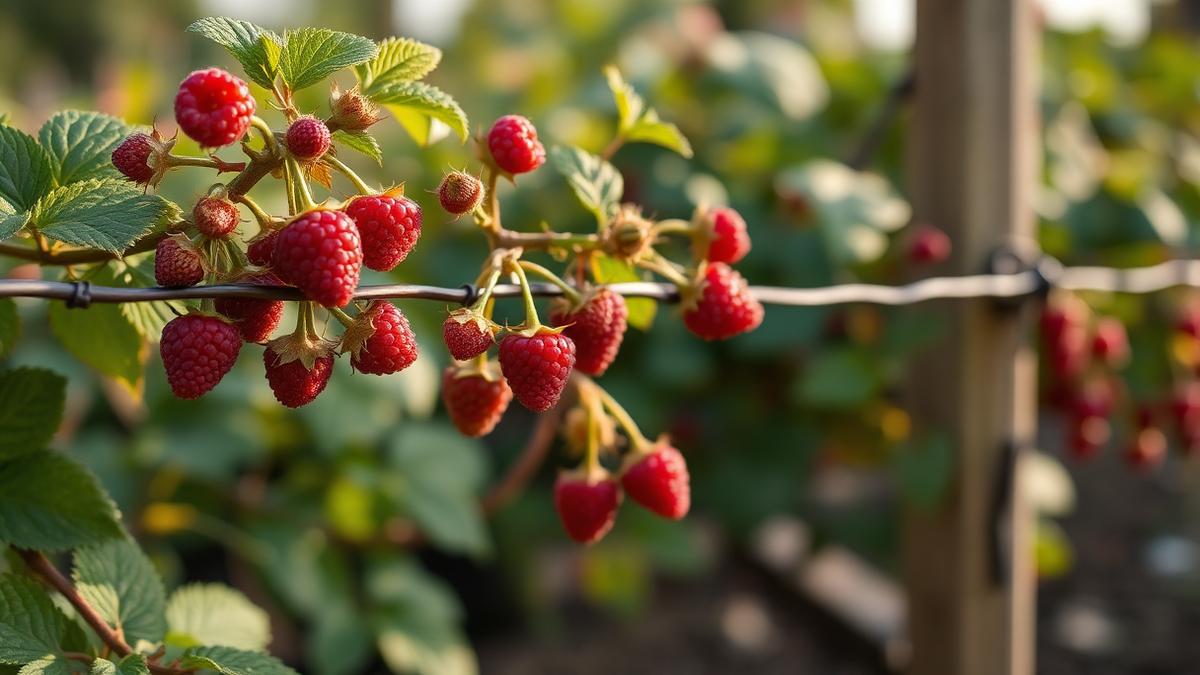
A spreading perennial where pruning strategy depends entirely on whether the variety fruits on this year's canes or last year's — get it backwards and you cut off the harvest.
| Light | Full sun to part shade |
|---|---|
| Water | Consistent, moderate |
| Spacing | 45-60 cm within rows, 1.8-2.4 m between rows |
| Zones | Zones 3-9 |
| Harvest | Summer-bearing: one crop in early summer; everbearing: two crops |
| Difficulty | Moderate |
Know which canes to cut
Summer-bearing raspberries fruit on second-year canes (floricanes); cut only the canes that fruited, right after harvest, and leave first-year canes for next year. Everbearing (primocane) types fruit on first-year canes in autumn and can be cut entirely to the ground each winter for a simpler, single autumn crop.
It spreads by suckering
Raspberries send up new canes from spreading roots well beyond the original planting row. Confine the patch with edging or a dedicated bed, or expect it to colonise nearby lawn and beds within a few seasons.
More plant profiles
- TomatoThe most-grown vegetable in home gardens, and the one most improved by consistent water and a cage or stake set at planting time.
- LettuceA fast, forgiving crop that bolts to seed in heat, so timing and shade matter more than soil fertility.
- BasilThe most temperature-sensitive common herb — it sulks below 10°C and needs regular pinching to stay leafy rather than flowering.