Vegetable (leafy biennial, grown as annual)
Kale
Brassica oleracea var. acephala
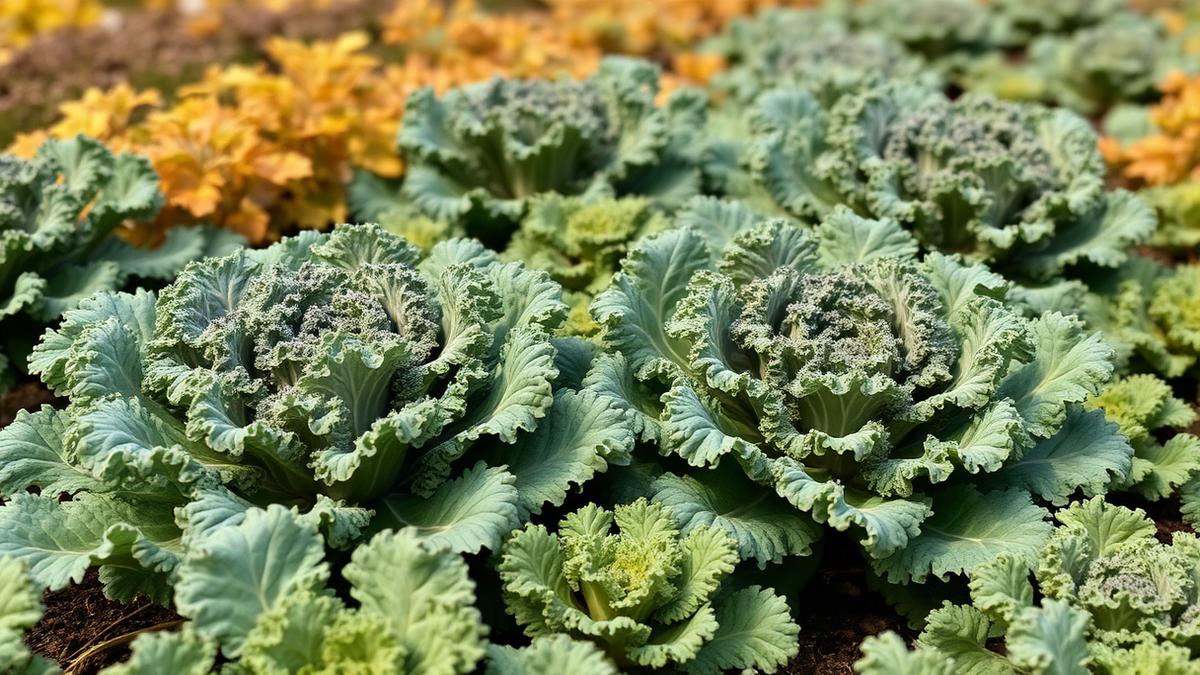
One of the most cold-tolerant vegetables grown, sweetening rather than declining after frost and providing a harvest window most crops can't match.
| Light | Full sun to part shade |
|---|---|
| Water | Consistent, moderate |
| Spacing | 30-45 cm |
| Zones | Cool-season; hardy to zone 6 outdoors through winter with protection |
| Harvest | 55-75 days, or pick outer leaves continuously |
| Difficulty | Easy |
Harvest from the outside in
Pick the oldest, outer leaves first and leave the central growing point intact; the plant keeps producing new leaves from the crown for months rather than being harvested once like a head crop.
Frost is a feature, not a threat
Like spinach, kale converts starch to sugar under cold stress, and many gardeners consider post-frost kale noticeably better tasting. It tolerates temperatures well below freezing, especially with a layer of row cover.
Watch for cabbage worms
Small holes riddling leaves usually mean cabbage white butterfly caterpillars. Check leaf undersides regularly and use row cover from planting to exclude egg-laying adults.
More plant profiles
- TomatoThe most-grown vegetable in home gardens, and the one most improved by consistent water and a cage or stake set at planting time.
- LettuceA fast, forgiving crop that bolts to seed in heat, so timing and shade matter more than soil fertility.
- BasilThe most temperature-sensitive common herb — it sulks below 10°C and needs regular pinching to stay leafy rather than flowering.