Tree (ornamental deciduous)
Japanese Maple
Acer palmatum
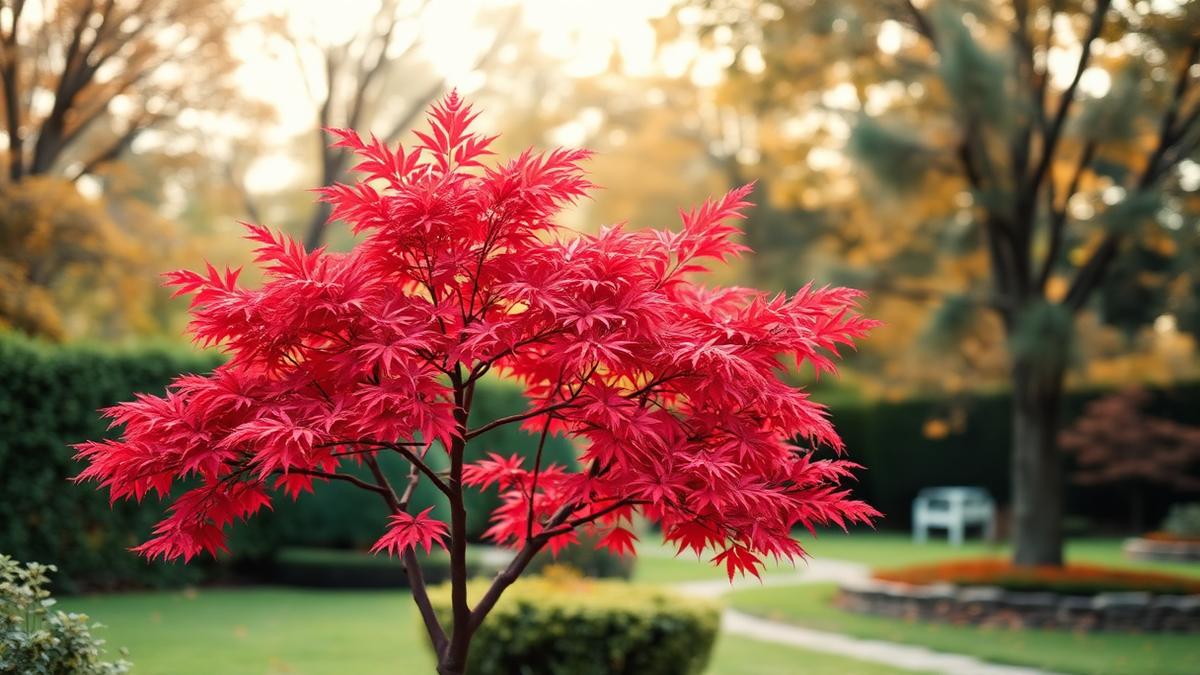
Prized for delicate, often red or lace-cut foliage that scorches badly in hot afternoon sun or dry wind — placement matters more than any other single decision.
| Light | Part shade to full sun depending on variety; afternoon shade in hot climates |
|---|---|
| Water | Consistent, moderate; sensitive to both drought and waterlogging |
| Spacing | 1.5-6 m depending on cultivar's mature size |
| Zones | Zones 5-8, some cultivars to zone 9 |
| Harvest | N/A — ornamental; prune in dormant season only |
| Difficulty | Advanced |
Leaf scorch is a placement problem
Crispy brown leaf edges in summer usually mean too much direct afternoon sun, wind exposure, or inconsistent watering — not disease. Red-leaved cultivars tolerate more sun than green-leaved ones, but all benefit from afternoon shade in hot climates.
Prune in dormancy, not spring
Japanese maples bleed sap heavily if pruned in spring as growth starts. Prune structural cuts in late autumn or winter while fully dormant, limiting spring work to removing dead or crossing twigs.
Roots stay shallow
The fine, shallow root system dries out faster than the tree's size suggests, especially in containers or during its first two to three years in the ground — mulch well and don't let it dry out repeatedly.
More plant profiles
- TomatoThe most-grown vegetable in home gardens, and the one most improved by consistent water and a cage or stake set at planting time.
- LettuceA fast, forgiving crop that bolts to seed in heat, so timing and shade matter more than soil fertility.
- BasilThe most temperature-sensitive common herb — it sulks below 10°C and needs regular pinching to stay leafy rather than flowering.