Shrub (broadleaf evergreen)
Boxwood
Buxus sempervirens
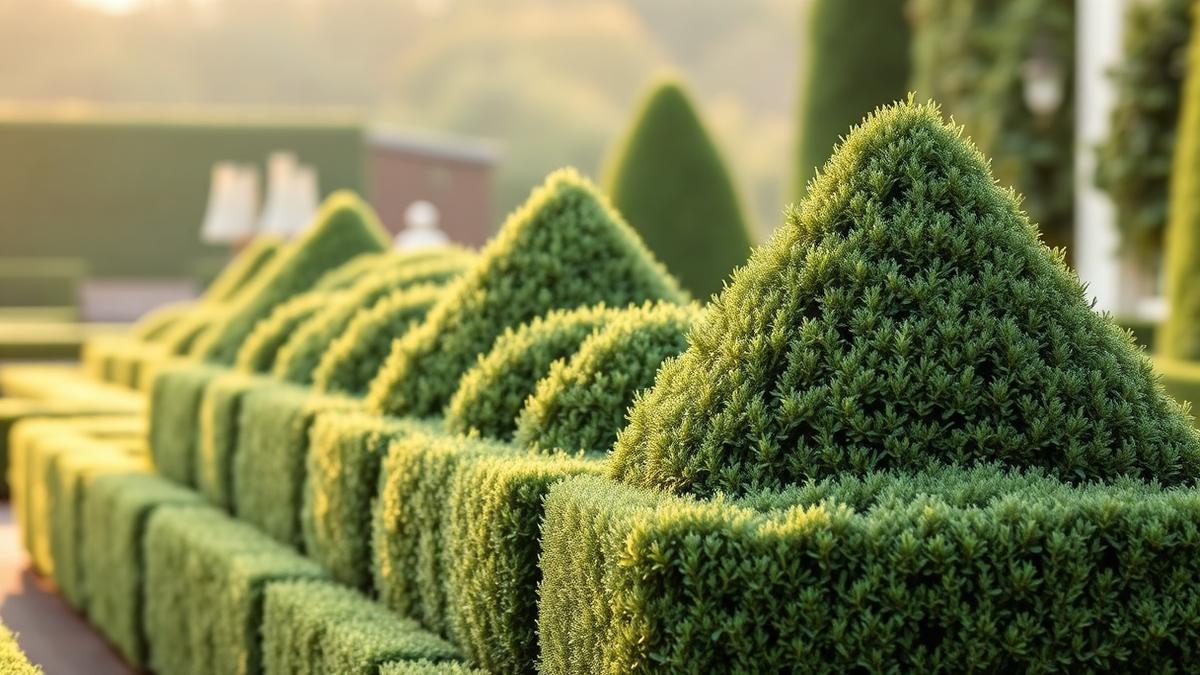
The classic clipped hedge and topiary shrub, slow-growing and long-lived but increasingly at risk from boxwood blight and box tree caterpillar in many regions.
| Light | Full sun to part shade |
|---|---|
| Water | Moderate; consistent for the first two years, drought-tolerant after |
| Spacing | 30-90 cm depending on desired hedge density |
| Zones | Zones 5-9 |
| Harvest | N/A — ornamental structure and hedging plant |
| Difficulty | Moderate |
Slow growth means patience, not neglect
Boxwood grows only 5-15 cm a year, so a hedge takes several years to fill in. Regular light shearing two to three times a season, rather than one hard annual cut, produces denser growth over time.
Watch for blight and box tree caterpillar
Boxwood blight causes brown leaf spots and rapid defoliation in humid conditions, spreading fast on shared tools; disinfect pruners between plants. Box tree caterpillar can strip a hedge of foliage within days where it has spread — inspect for webbing and green-and-black caterpillars regularly through the growing season.
Winter bronzing is usually cosmetic
Leaves turning bronze or orange in cold winters is a natural pigment response to cold and sun exposure, not necessarily dieback; they typically green back up in spring.
More plant profiles
- TomatoThe most-grown vegetable in home gardens, and the one most improved by consistent water and a cage or stake set at planting time.
- LettuceA fast, forgiving crop that bolts to seed in heat, so timing and shade matter more than soil fertility.
- BasilThe most temperature-sensitive common herb — it sulks below 10°C and needs regular pinching to stay leafy rather than flowering.