Timber
Composite Decking
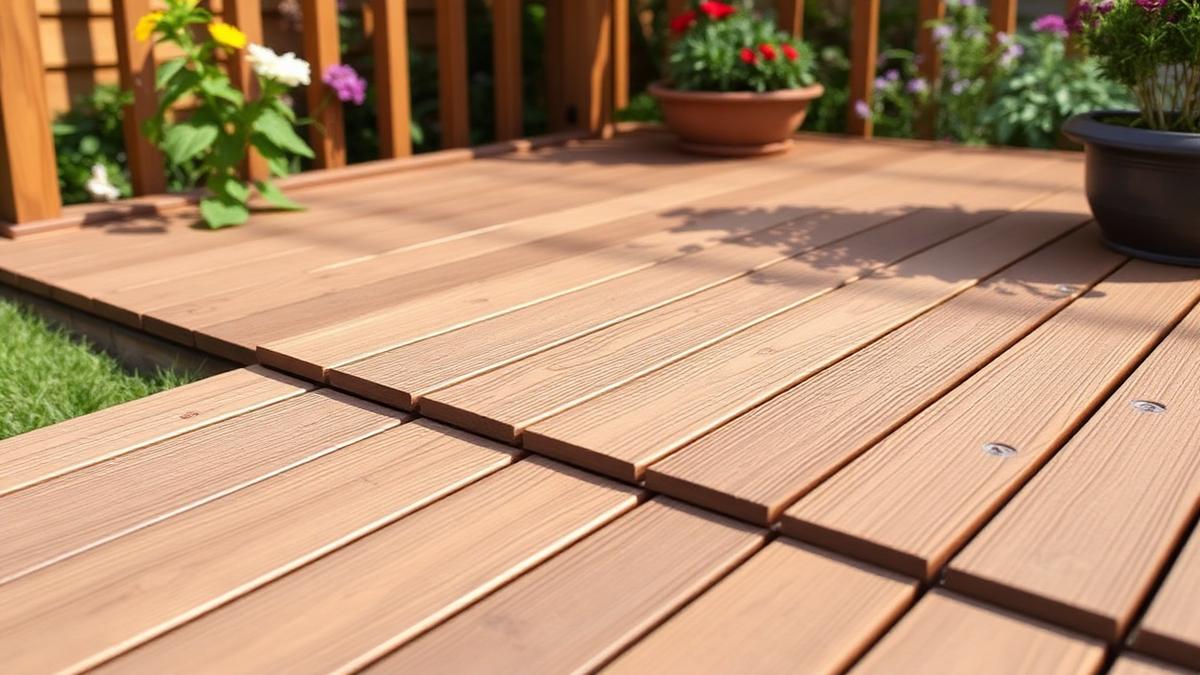
A manufactured board of recycled wood fibre and plastic, sold as a low-maintenance alternative to timber decking.
Best for
- Homeowners who want to avoid annual staining or sealing
- High-moisture climates where wood rot is a constant fight
- Long-term ownership where lifetime cost matters more than upfront price
Avoid when
- Tight budgets — the upfront cost is well above pressure-treated pine
- Very hot, sun-exposed decks, where some composites get noticeably hot underfoot
The maintenance trade-off is the whole pitch
Composite doesn't need annual staining and won't splinter or rot, but it also can't be sanded or refinished if it fades or scratches — what you buy is largely what you're stuck with.
Not all composites are equal
Capped composite boards (with a plastic outer shell) resist staining and fading far better than uncapped boards, which can mould in humid climates — worth the extra cost in most regions.
Put this into practice
- Deck and Fence Material CalculatorHow much timber does my deck or fence need?