Energy
The Ceiling Fan Switch on the Motor Housing Actually Does Something
Counterclockwise in summer, clockwise in winter isn't folklore — it changes airflow direction enough to shift comfort by a degree or two.
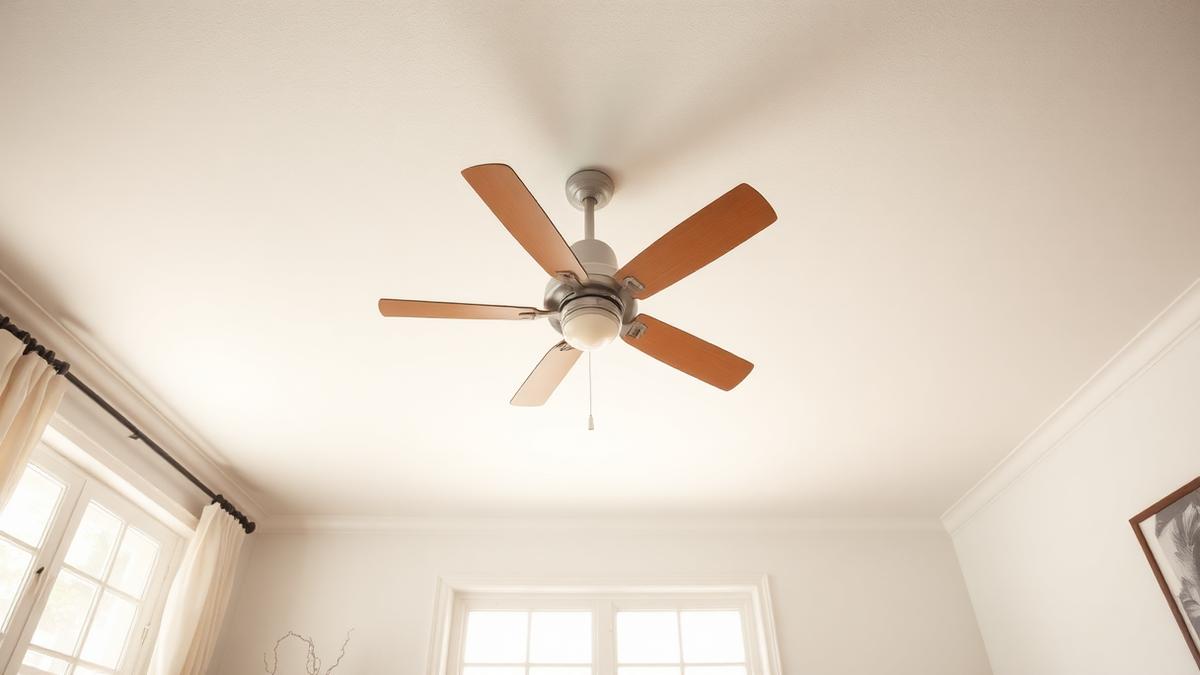
A ceiling fan blade is angled, so its direction of spin determines whether it drives air straight down (counterclockwise, standard forward setting) or draws air up and out toward the walls (clockwise, reverse). In summer, the direct downdraft creates a wind-chill effect on skin, letting you raise the thermostat a degree or two without feeling it. In winter, the gentle reverse draw pulls warm air that has risen to the ceiling back down along the walls without a noticeable breeze.
The energy saving isn't from the fan cooling the room — fans move air, they don't lower its temperature — it's entirely from adjusting the thermostat while comfort stays the same. Leaving a fan running in an empty room wastes electricity for no comfort benefit at all.
Written and reviewed by Jim Vernon, editor of Home & Garden Answers · Last updated
Put this into practice
- Energy Savings CalculatorWill this upgrade pay for itself?
More facts like this
- Compressing Insulation Destroys Most of Its ValueAn R-19 batt crushed into a 2x4 cavity performs at roughly R-13 — you pay for R-19 and install R-13.
- Standby Power Is a Real Line on Your Bill — Just Smaller Than ClaimedStandby typically accounts for 2-5% of household electricity now, concentrated in a handful of specific devices.
- Watts Stopped Meaning Brightness Two Decades AgoLumens measure light; watts measure consumption. An LED can produce eight times the light of an incandescent at the same wattage.