Designing a Rain Garden That Actually Drains
By Jim Vernon · 5 min read · Last updated
A rain garden that stays wet for days is a mosquito problem, not a rain garden. Sizing and soil prep are what make the difference.
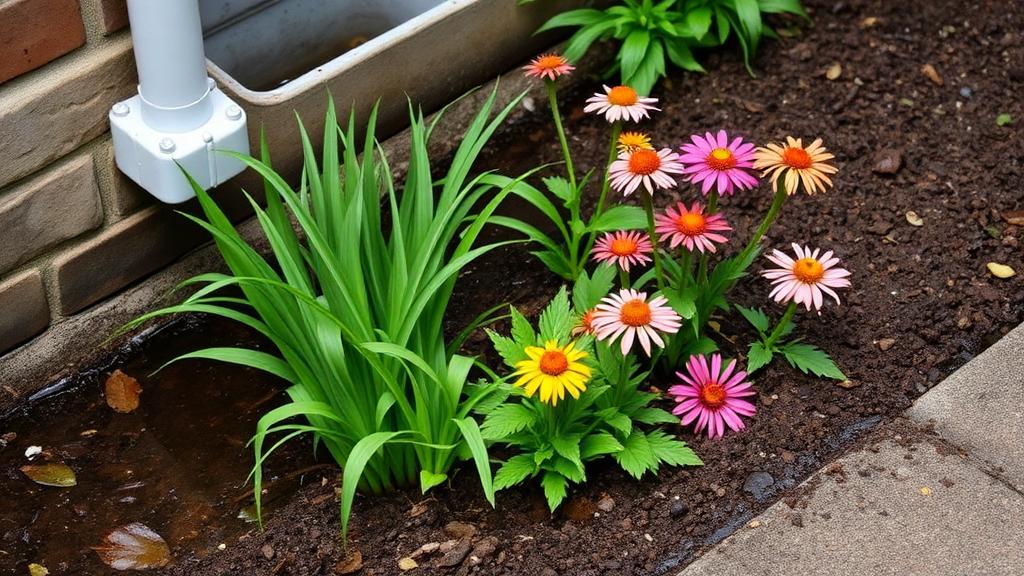
A rain garden is a shallow, planted depression designed to capture runoff from a roof, driveway, or lawn and let it soak into the ground rather than run off into storm drains. Done correctly it drains within 24-48 hours; done without checking drainage first, it becomes a standing pool that breeds mosquitoes and drowns the plants meant to live in it.
Test infiltration before digging
Dig a test hole roughly a foot deep, fill it with water, and time how long it takes to drain. Soil that drains at least an inch per hour is generally suitable for a rain garden without amendment; slower-draining clay soils need either significant compost amendment or relocation of the garden to a spot with better native drainage.
Sizing based on the contributing area
| Soil type | Rain garden size as % of contributing hard-surface area |
|---|---|
| Sandy soil | 10-15% |
| Loam soil | 15-20% |
| Clay soil | 20-30%, or amend soil first |
The contributing area is whatever hard surface drains toward the garden — typically a section of roof measured by its footprint, or a driveway panel. A 500-square-foot roof section draining into loam soil suggests a rain garden of roughly 75-100 square feet.
Siting rules that matter
- At least 10 feet from the house foundation to avoid directing water toward the basement or footings.
- Away from septic drain fields and well heads.
- In a natural low point where water already tends to collect, if one exists, rather than fighting the grade.
- Not directly beneath large existing trees, since heavy excavation can damage roots.
Planting in zones by moisture tolerance
A rain garden has a wet centre that holds water briefly after storms and drier edges that rarely flood. Plant true moisture-lovers only in the lowest centre zone, and progressively more drought-tolerant species toward the rim, so every plant is matched to how often its roots will actually sit in water.
Directing water in
A shallow swale or a length of buried pipe from the downspout to the rain garden edge ensures water actually reaches the basin rather than sheeting across the lawn. An overflow point on the downhill side, set slightly lower than the inlet, lets excess water beyond the garden's capacity continue safely to its original drainage path during major storms.
A worked example: sizing from a roof section
A 400-square-foot section of roof draining to one downspout, in loam soil at the 15-20% guideline, points to a rain garden of roughly 60-80 square feet. A basin depth of 4-6 inches on that footprint holds a meaningful volume of runoff from a typical storm while staying shallow enough to drain within the 24-48 hour target.
Common rain garden mistakes
- Skipping the infiltration test and discovering after a storm that the site simply does not drain fast enough.
- Siting the garden too close to the foundation, redirecting water toward the house rather than away from it.
- Planting moisture-loving species across the entire basin instead of zoning by how often each spot actually floods.
- Building the basin without an overflow path, so a heavy storm sends water somewhere uncontrolled instead of back to its original route.
Maintenance through the first two years
A newly planted rain garden needs regular watering during dry spells for its first one to two seasons, the same as any new planting, even though its long-term purpose is to handle excess water rather than need supplemental irrigation. Weeding is also more intensive early on, since the disturbed, exposed soil of a freshly dug basin is prone to colonization by fast-germinating weeds before the intended plants fill in.
Signs a rain garden needs adjustment
- Standing water beyond 48 hours after a storm points to an infiltration problem that needs soil amendment or a re-check of the original test.
- Erosion at the inlet suggests water is arriving with too much force and needs a rock apron or splash pad to slow it down before it enters the basin.
- Sparse growth in the centre zone after a full season may mean the chosen plants are not tolerant enough of the flooding they actually experience.
- Sediment buildup at the inlet reduces capacity over time and should be cleared out periodically, especially after major storms.
Budgeting a DIY build
An 80-square-foot rain garden dug by hand in workable loam, planted with a mix of gallon-container natives at roughly one plant per 2-3 square feet, typically runs $300-700 in plants, compost amendment, mulch, and a length of buried downspout pipe, assuming the homeowner does the excavation. Bringing in a small excavator for the digging, or hiring a landscaper for the full build, commonly pushes the same project to $1,500-3,500 depending on regional labor rates and soil difficulty — clay sites needing significant amendment sit at the higher end of that range.
How long should a rain garden take to drain after a storm?
Within 24-48 hours. Longer than that indicates the soil needs amendment or the site has insufficient natural drainage for a rain garden.
Will a rain garden attract mosquitoes?
Not if it drains within the standard window, since mosquito larvae need roughly a week of standing water to complete their cycle. A properly sized and sited rain garden drains far faster than that.
Can a rain garden work on a slope?
Yes, with a berm built on the downhill side to hold water in the basin rather than letting it continue downhill, but steep slopes need more engineering than a flat or gently sloped site.
Do rain gardens need a liner?
No, a standard rain garden relies on native soil infiltration. A liner would defeat the purpose and is only used in specialized detention designs, not typical residential rain gardens.
Can a rain garden replace a sump pump or French drain?
Not usually on its own for serious basement water issues, but it can meaningfully reduce the volume reaching a foundation drain system by capturing surface runoff before it saturates the soil near the house.
Run the numbers for your own project
- Rain Barrel and Water Harvest CalculatorHow much rainwater can I actually harvest from my roof?
- Wildflower and Pollinator Mix CalculatorHow much wildflower seed do I need for my patch?
- Soil Amendment and pH CalculatorHow much lime or sulfur do I need to fix my soil pH?
Keep reading
- Sealing Draughts: The Cheapest Energy Work in Any HouseAir leakage is invisible, unglamorous, and usually the largest single heat loss you can fix in a weekend.
- Composting for Beginners: The Ratio That Makes It WorkA compost heap that smells bad or never breaks down is missing one of four things. It is never bad luck.
- Attracting Pollinators to a Small Garden or BalconyA pollinator garden is less about a specific plant list and more about never leaving a gap in bloom time.